

Computational thinking is the process of identifying a clear, defined, step-by-step solution to a complex problem. Its definition includes breaking down a problem into smaller pieces, recognizing patterns and eliminating extraneous details so that a step-by-step solution can be defined and replicated.
The power of computational thinking starts with decomposition, which is the process of breaking down complex problems into smaller, more manageable parts. With decomposition, problems that seem overwhelming at first become much more manageable.
“If you can’t solve a problem, then there is an easier problem you can solve: find it.” George Pólya
What Does Decomposition Mean in Computational Thinking?
Decomposition in computational thinking is the process of breaking down a problem into a number of smaller problems that can more easily be addressed. It is considered to be an effective method of solving complex problems as it helps to identify patterns, eliminate extraneous details and solve the problem step by step instead of trying to do so all at once.
This process is detailed in the graph below:
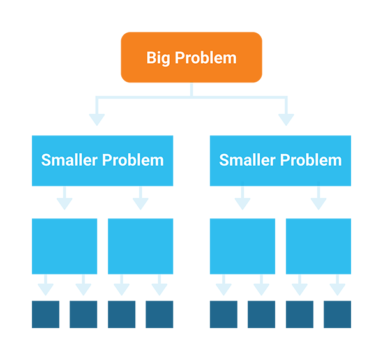
Problems we encounter both in the course of student learning and throughout our daily lives are ultimately composed of smaller problems we can more easily address. This process of breaking down problems enables us to analyze the different aspects of them, ground our thinking and guide ourselves to an end point.
Examples of Decomposition in Everyday Life
Decomposition is something we inherently do in our daily lives, even if we don’t realize it.
Hosting a Holiday Dinner. If you host a holiday dinner, for instance, you will use decomposition to select the menu, enlist support from others in the kitchen, task people with what to bring, determine the process of cooking what and when and setting the time for the event. If you went to the grocery store for this holiday dinner, you would use decomposition to build your grocery list, guide the direction you took as you shopped each aisle and even drive to and from the store.
Change Initiatives at Work. If you’ve implemented a new program or change initiative at work (or home), then you most likely used decomposition to build your strategic plan. This would include defining the program’s vision, strategizing how to gain buy-in, developing goals for the initiative and creating a step-by-step process for achieving those goals.
Examples of Decomposition in Curriculum
Decomposition is a powerful tool that guides how we approach everyday projects and tasks. It is also something employed in student learning. Here are some examples for accentuating these in curriculum:
- English Language Arts: Students analyze themes in a text by first answering: Who is the protagonist and antagonist? Where is the setting? What is the conflict? What is the resolution?
- Mathematics: Students find the area of different shapes by decomposing them into triangles.
- Science: Students research the different organs in order to understand how the human body digests food.
- Social Studies: Students explore a different culture by studying the traditions, history and norms that comprise it.
- Languages: Students learn about sentence structure in a foreign language by breaking it down into different parts like subject, verb and object.
- Arts: Students work to build the set for a play by reviewing the scenes to determine their setting and prop needs.
Examples of Decomposition in Computer Science
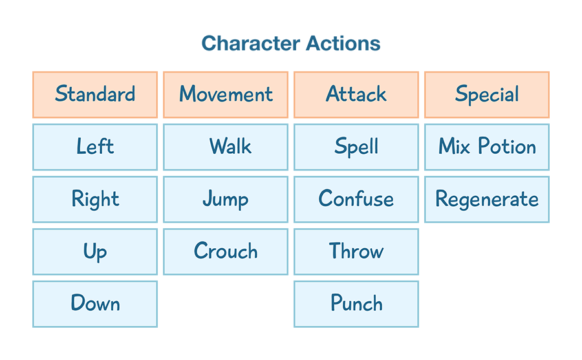
Then, from a computer science and coding perspective, decomposition can come into play when students are programming a new game. For example, students need to consider the characters, setting and plot, as well as consider how different actions will take place, how it will be deployed and so much more.
Final Thoughts
Decomposition is deeply ingrained in how we function daily and address problems both big and small. The concept already exists with students, but students need to learn how to recognize this process as it happens and leverage it when they feel overwhelmed in the case of a problem, task, or project.
Decomposition teaches students embrace ambiguity and equips them with the confidence to learn new things.

Learning.com Team
Staff Writers
Founded in 1999, Learning.com provides educators with solutions to prepare their students with critical digital skills. Our web-based curriculum for grades K-12 engages students as they learn keyboarding, online safety, applied productivity tools, computational thinking, coding and more.
Further Reading

Discover the Truth About Digital Literacy
The COVID-19 pandemic has clearly elevated the primacy of digital literacy and utilization, both for students of all ages and employees across nearly every industry. Now, over a year later, it’s safe to say nearly every teacher and student uses a device to enable some or all of their education. Technology has been integrated into every single subject, from P.E. to music and math to history. However even through all this, are both students and teachers efficiently prepared and educated in digital literacy?

Gearing Up for the New(est) Normal in Learning
Gearing up means a recognition that the traditional schooling model has shifted significantly, requiring new skills, particularly student digital literacy. What are the moves to make, what to gear up and how. Finally, what comes after digital literacy. What do you need to attend to now to ensure success for all students?

District Develops Digital Curriculum with Learning Partner’s Help
As the instructional technology director for Corpus Christi Independent School District, Cary Perales needed a digital curriculum to meet several requirements: Technology Application TEKS, E-Rate, and David’s Law, which is aimed at curbing cyberbullying. When Perales found Learning.com, she liked the EasyTech digital curriculum and modules that spanned everything from digital citizenship to keyboarding skills, and multimedia presentation skills to introductory coding.