

We now expect students to proficiently navigate multiple systems and produce texts, digital work products and communications in a variety of digital modes. These skills are now the baseline, and they bring digital literacy to the forefront because what appears to be a student’s academic shortcoming or learning loss, may actually be a gap in digital skills needed to convey their true understanding.
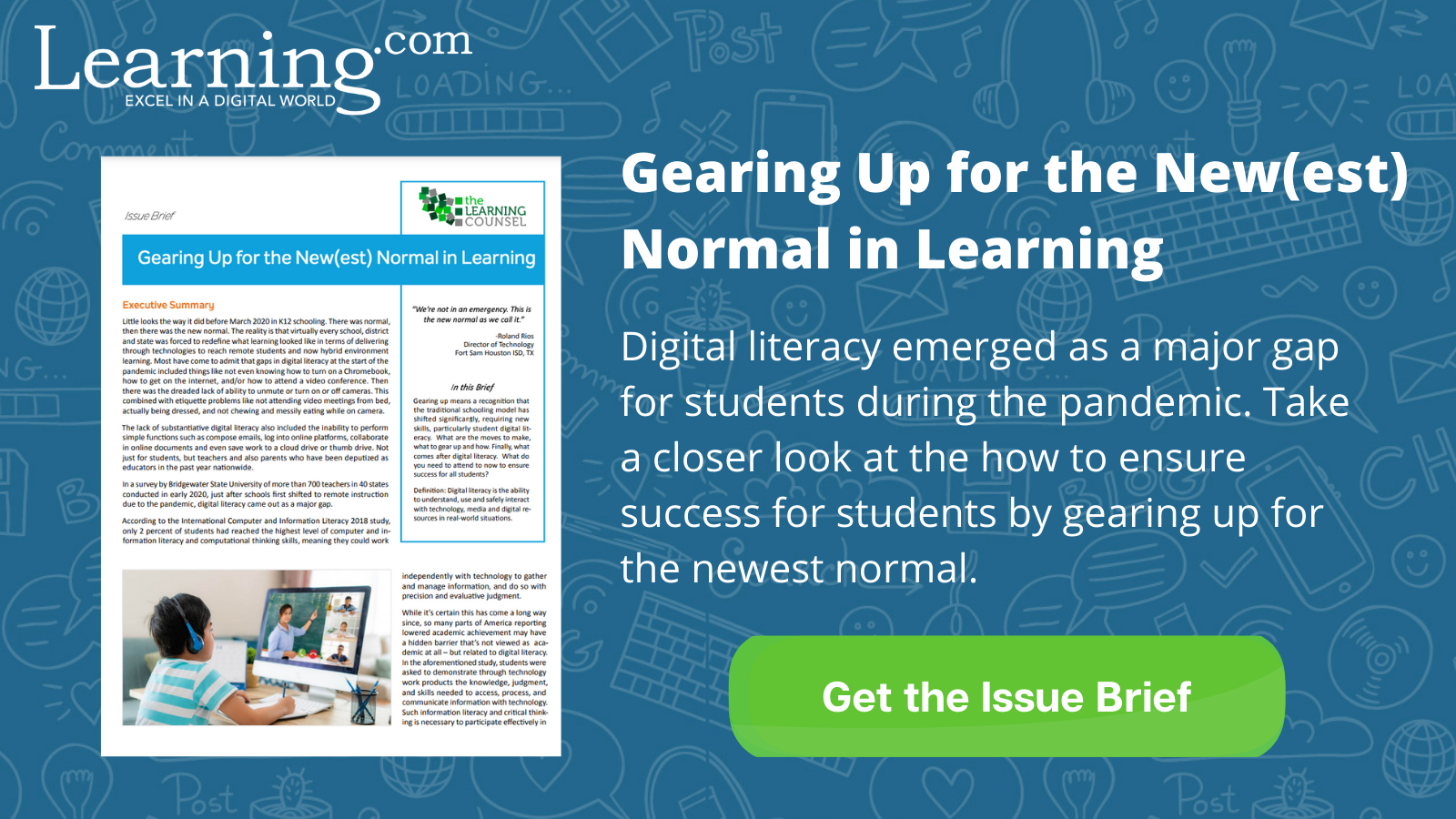
Gearing up for the new(est) normal means recognizing that the traditional school model has shifted significantly, requiring new skills, particularly in digital literacy. What’s more, this newest normal presents often overlooked challenges for both students and teachers.
Learning.com is proud to share this The Learning Counsel paper that gives concrete steps to help educational leaders and teachers:
- See the issues
- Identify what to gear up
- Know how to gear up

Christine Byrd
Author at Learning.com
Christine has over 17 years of experience as an award-winning writer, thorough researcher, detail-oriented editor, and communications strategist. She specializes in providing internal and external communications for corporate, academic and nonprofit leaders.
Further Reading

AI literacy has to be about more than AI
I recently went to Google and searched for the most common definitions of AI literacy. After skipping the AI-generated response, I found definitions...

AI for K–2? Yes!
Why AI Safety Starts in K–2 AI is already part of students' daily lives, even in the earliest grades. Young learners are interacting with voice...

State of K–8 Digital + AI Literacy: What’s Changed – and What Schools Need to Do Next
AI didn’t create the need for digital literacy, but it did expose how urgent it has become. Students are using AI tools to search, write, solve,...