
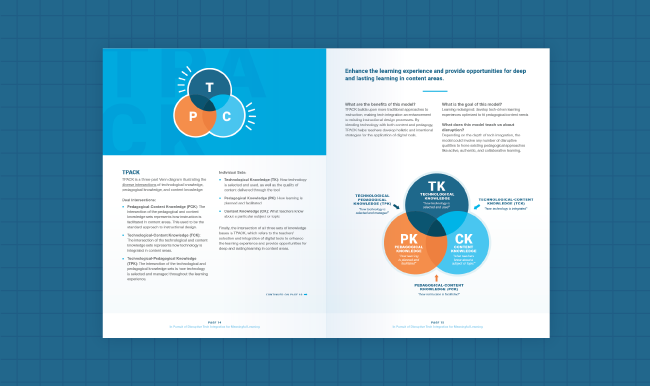
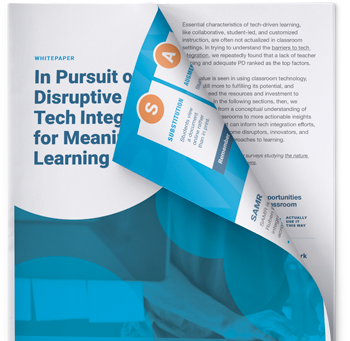
After weeks or months of online-only learning, students, teachers, administrators and parents have returned to classrooms with greater access to devices and internet connection, as well as new digital skills. In that sense, the disruption in the classroom that we imagined when contemplating this white paper — the disruption that would require meaningful tech integration — has already happened. Technology was forcefully and somewhat chaotically integrated into every classroom, ready or not, in 2020.
Rather than make “In Pursuit of Disruptive Tech Integration for Meaningful Learning” obsolete, the pandemic made it even more urgent and important. With the immediate crisis now behind us, educators must assess how to thoughtfully and meaningfully integrate technology into their classrooms, creating a new normal. This prescient white paper is your guide for these times.

Christine Byrd
Author at Learning.com
Christine has over 17 years of experience as an award-winning writer, thorough researcher, detail-oriented editor, and communications strategist. She specializes in providing internal and external communications for corporate, academic and nonprofit leaders.
Further Reading
It Is Not About the Tool. It Is About the Thinking.
In honor of AI Literacy Day, we wanted to offer a practical way to explore what AI literacy really means for students and for schools. Rather than...

You Can’t Ban the Future, But You Can Teach It.
Banning AI Won't Work. Teaching AI Literacy Will. When new technology disrupts education, the first instinct is often control. Limit access. Block...
Making Digital and AI Literacy a District Priority: Three governance and leadership actions to move from aspiration to scalable impact
Author: Dr. Jesus Jara, Former Superintendent, Clark County & Lisa O'Masta, CEO of Learning.com Integration does not scale because we believe in...