
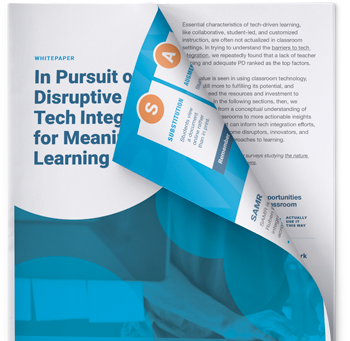
After weeks or months of online-only learning, students, teachers, administrators and parents have returned to classrooms with greater access to devices and internet connection, as well as new digital skills. In that sense, the disruption in the classroom that we imagined when contemplating this white paper — the disruption that would require meaningful tech integration — has already happened. Technology was forcefully and somewhat chaotically integrated into every classroom, ready or not, in 2020.
Rather than make “In Pursuit of Disruptive Tech Integration for Meaningful Learning” obsolete, the pandemic made it even more urgent and important. With the immediate crisis now behind us, educators must assess how to thoughtfully and meaningfully integrate technology into their classrooms, creating a new normal. This prescient white paper is your guide for these times.

Christine Byrd
Author at Learning.com
Christine has over 17 years of experience as an award-winning writer, thorough researcher, detail-oriented editor, and communications strategist. She specializes in providing internal and external communications for corporate, academic and nonprofit leaders.
Further Reading

The Digital Readiness Divide in Education
Following access and connectivity, the second digital divide refers to digital readiness, or the skillset that enables people to use technology as...

Pursuing Digital Access & Opportunity for All Students
While devices such as laptops and tablets have become significantly more common in schools since 2020, challenges persist in access, especially due...

AI in Education: Leveraging Chat GPT in the Classroom
The introduction of ChatGPT into educational settings has sparked a vigorous debate regarding its ethical implications, primarily centered on...